


A safe home isn’t only about locking doors and installing smoke alarms. Your electrical system also deserves regular attention. Small issues such as a damaged power cord, an overloaded outlet or a faulty switch can become serious hazards if left unchecked.
Following a few simple electrical safety tips can help reduce the risk of electric shock, appliance damage and house fires. While many checks take only a few minutes, some problems should always be assessed by a licensed electrician. Here are five practical ways to improve home electrical safety and create a safer living environment.
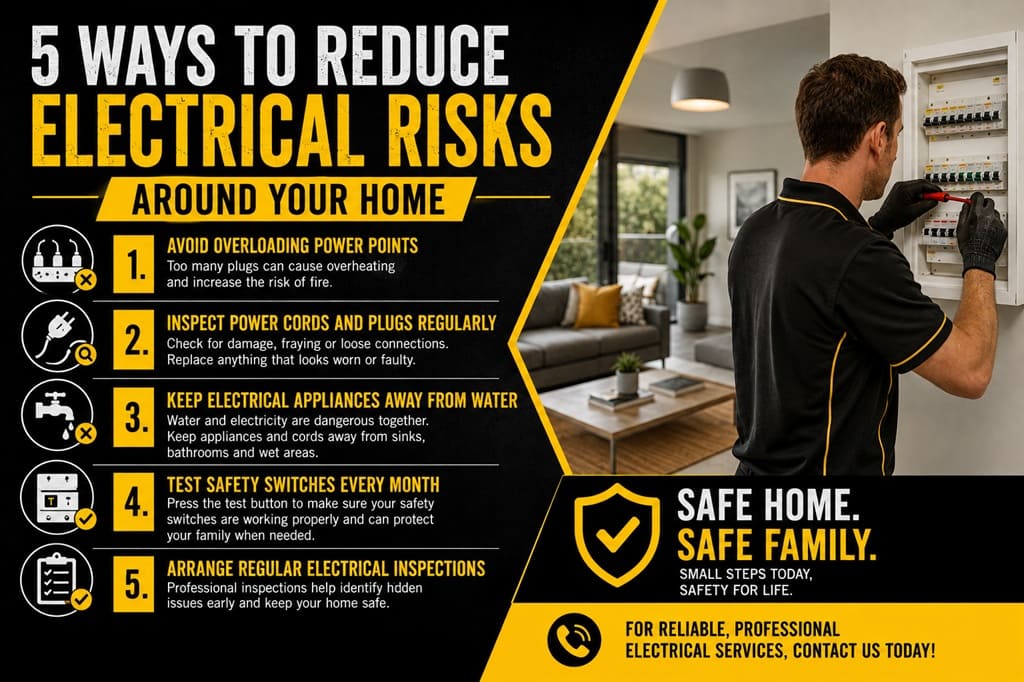
1. Avoid Overloading Power Points
Everyday life depends on electricity, but using too many appliances from a single outlet can place unnecessary strain on your electrical system. High-powered appliances such as kettles, heaters and microwaves should have their own wall outlet wherever possible.
A few simple habits can make a big difference.
- Avoid plugging multiple high-power appliances into one outlet.
- Use quality power boards with overload protection.
- Never plug one power board into another.
- Switch appliances off when they are no longer needed.
Adding these checks to your regular electrical safety checklist can help prevent overheating and reduce the risk of electrical faults.
2. Inspect Power Cords and Plugs Regularly
Power cords experience daily wear and tear. They may become damaged after being bent, trapped under furniture or exposed to heat and moisture. Ignoring damaged cables increases the risk of electric shock and fire.
Look for these warning signs during routine inspections.
| Warning sign | Why it needs attention |
| Frayed or cracked cords | Exposes live wiring |
| Burn marks on plugs | May indicate overheating |
| Loose plugs | Poor electrical connection |
| Hot extension leads | Possible overloading |
If you notice any of these problems, stop using the appliance until it has been repaired or replaced.
The Australian Competition and Consumer Commission(ACCC) regularly publishes recalls for unsafe electrical products. Checking these notices from time to time is another simple step towards better electrical safety at home.
3. Keep Electrical Appliances Away from Water
Water and electricity should never mix. Kitchens, bathrooms, laundries and outdoor entertaining areas are the places where extra care is needed.
Simple electrical safety tips include drying your hands before touching switches, keeping appliances away from sinks and replacing damaged outdoor fittings without delay. Outdoor power points should also be weather-protected and suitable for Australian conditions.
Many homes now include powered features such as electric gates, garage doors and roller shutters. These systems should also be inspected if they stop operating correctly or show signs of damage.
Good home electrical safety means looking after every electrical system on your property, not only the obvious ones.
4. Test Safety Switches Every Month
Safety switches, also known as Residual Current Devices (RCDs), are designed to disconnect power almost instantly if an electrical fault occurs. They are one of the most effective ways to reduce the risk of serious electric shock.
Testing takes less than a minute. NSW Fair Trading recommends testing safety switches regularly to make sure they continue working as intended. Including this task in your monthly electrical safety checklist gives you greater confidence that an essential safety device will work when needed.
5. Arrange Regular Electrical Inspections
Not every electrical problem is visible. Loose wiring, ageing switchboards and worn electrical connections may remain hidden until they cause larger issues.
It may be time to arrange an inspection if:
- Your home is more than 20 years old.
- Circuit breakers trip frequently.
- Lights flicker without explanation.
- You notice burning smells near switches or outlets.
- You’re planning renovations or installing new appliances.
Regular inspections are among the most valuable electrical safety tips because they help identify problems before they become expensive repairs or serious hazards. A licensed electrician can also confirm that your home’s electrical system continues to meet current Australian safety requirements.
Good electrical safety at home starts with simple habits. Inspecting power cords, avoiding overloaded outlets, testing safety switches and arranging regular inspections can all help reduce the risk of electrical faults.
One Last Thing
If you’ve noticed flickering lights, ageing wiring or circuit breakers that trip regularly, it’s worth arranging a professional inspection rather than waiting for the problem to get worse. At Stuart Johnston Electrical, we have been helping homeowners across Wollongong and the Illawarra.
We help with electrical inspections, repairs and upgrades that help keep homes safe and compliant with Australian Standard.
Call us on 0418 422 182 for a complete inspection.