
Electricity powers almost everything we use every day, from lights and air conditioners to and laptops. While electricity may seem simple on the surface, it actually flows in two different ways. These are known as Alternating Current (AC) and Direct Current (DC).
Understanding the difference between AC and DC currents is helpful for homeowners, businesses, and anyone who wants to make informed decisions about electrical systems, safety, and energy use. In this guide, we explain AC vs DC in clear and simple terms, how each current works, where they are used, and why both are essential across Australia.
What is Electrical Current?
Electrical current is the movement of electric charge through a conductor such as a wire. It is measured in amps and requires voltage to flow.
There are two main types of electrical current used worldwide:
- Alternating Current (AC)
- Direct Current (DC)
Each type behaves differently and is suited to different applications.
What is Alternating Current (AC)?
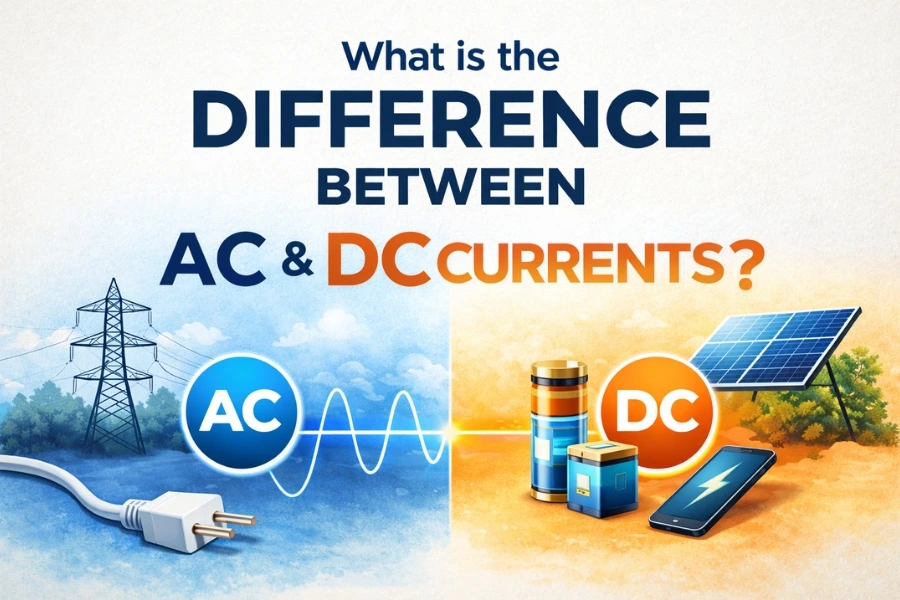
Alternating Current (AC) is a type of electrical current where the flow of electricity changes direction continuously. In Australia, AC power changes direction 50 times per second, which is measured as 50 hertz (Hz).
This changing flow allows electricity to travel long distances efficiently, making AC ideal for supplying power to cities, towns, and regional areas.
How AC Power is Used
AC electricity is generated at power stations and delivered through overhead and underground power lines. One major benefit of AC is that its voltage can be increased or decreased using transformers. This reduces energy loss during transmission and improves safety.
Common Uses of AC Current
- Power supply to homes
- Commercial and industrial buildings
- Lighting systems
- Wall sockets and power outlets
- Large household appliances
In Wollongong and across Australia, AC is the standard electricity used in residential and commercial properties.
What is AC Voltage?
AC voltage rises and falls in a smooth wave pattern. This means the voltage moves between positive and negative values rather than staying constant. This behaviour makes AC suitable for efficient power transmission and conversion.
What is Direct Current (DC)?
Direct Current (DC) flows in one direction only. It does not reverse like AC. Because of this steady flow, DC provides consistent and stable power, which is ideal for electronic devices and battery-based systems.
DC electricity usually comes from stored or generated sources rather than the power grid.
Common Uses of DC Current
- Batteries
- Solar panels
- Mobile phones and tablets
- Computers and televisions
- Electric vehicle batteries
Many devices in your home run on DC power even though they are plugged into AC wall outlets.
What is DC Voltage?
DC voltage remains constant over time. It does not fluctuate like AC voltage. This steady voltage is essential for protecting sensitive electronic components and ensuring reliable performance.
A Short History of AC and DC Power
In the late 1800s, there was a strong debate over which type of current should be used to power cities. This period is often referred to as the War of Currents.
- Thomas Edison promoted DC power for its stability.
- Nikola Tesla supported AC power because it could be transmitted efficiently over long distances.
AC eventually became the global standard for power distribution. However, DC remains just as important today, especially with the rise of renewable energy and modern electronics.
AC vs DC Currents: Key Differences
The table below highlights the main differences between AC and DC currents.
| Feature | Alternating Current (AC) | Direct Current (DC) |
| Direction of flow | Changes direction regularly | Flows in one direction |
| Voltage behaviour | Continuously rises and falls | Remains constant |
| Transmission distance | Suitable for long distances | Best for short distances |
| Main usage | Homes, offices, power grids | Electronics, batteries |
| Energy conversion | Easy to transform voltage | Requires electronic converters |
| Typical examples | Power outlets, lighting | Solar panels, phones |
Modern Applications of AC and DC Currents
AC Power Today
AC power continues to be the backbone of Australia’s electrical infrastructure. It supplies electricity to:
- Residential homes
- Commercial buildings
- Industrial facilities
- Public infrastructure
Its ability to handle large loads and long-distance transmission makes it essential for the national power grid.
DC Power in Modern Technology
DC power has become increasingly important due to advancements in technology and renewable energy:
- Solar panels generate DC electricity
- Batteries store DC power
- Electric vehicles rely on DC charging systems
- Most electronic devices operate internally on DC
As renewable energy systems grow across Australia, DC power plays a key role in energy storage and sustainability. Many modern systems also rely on properly installed data and communications cabling to ensure reliable performance, safety, and compliance in residential and commercial environments.
AC and DC Power in Australian Homes
Although Australian homes receive AC electricity, many devices convert this power into DC before use. Power adapters and chargers perform this conversion to ensure devices receive safe and stable voltage.
This combination of AC distribution and DC usage allows modern homes to function efficiently and safely.
Which Current is Best for Your Needs?
Both AC and DC currents are essential. AC is ideal for powering homes, businesses, and large systems. DC is best for electronics, energy storage, and renewable technologies.
Understanding the difference between AC and DC currents helps ensure electrical systems are efficient, safe, and fit for purpose.
For expert electrical advice, inspections, or installations in Wollongong and surrounding areas, Stuart Johnston Electrical provides professional, licensed services you can trust, backed by real-world experience and a strong understanding of Australian electrical standards.
Frequently Asked Questions
Why is DC power not used for household supply?
DC power is not efficient for long-distance transmission and voltage changes. AC power can be easily transformed and distributed, making it better suited for homes.
What is the easiest way to understand AC vs DC?
AC changes direction continuously, while DC flows steadily in one direction.
Does Australia use AC or DC electricity?
Australia uses AC electricity for power generation and household supply. DC is mainly used for electronics, batteries, and renewable energy systems.
How can you identify AC or DC current?
AC voltage varies over time, while DC voltage remains steady. Electricians use testing tools to identify the type safely.