


Electrical appliances are part of everyday life in homes, offices, workshops, warehouses, and commercial buildings. From power tools and extension leads to computers and kitchen equipment, these appliances help businesses and households operate efficiently. However, faulty electrical equipment can quickly become a serious safety risk if it is not properly inspected and maintained.
That is why testing and tagging is an important part of electrical safety across Australia. Regular testing and tagging helps identify hidden electrical faults before they cause electric shocks, equipment damage, power failures, or workplace accidents.
At Stuart Johnston Electrical, our experienced electricians provide professional testing and tagging services across Wollongong and the Greater Illawarra to help businesses maintain safe and compliant workplaces.
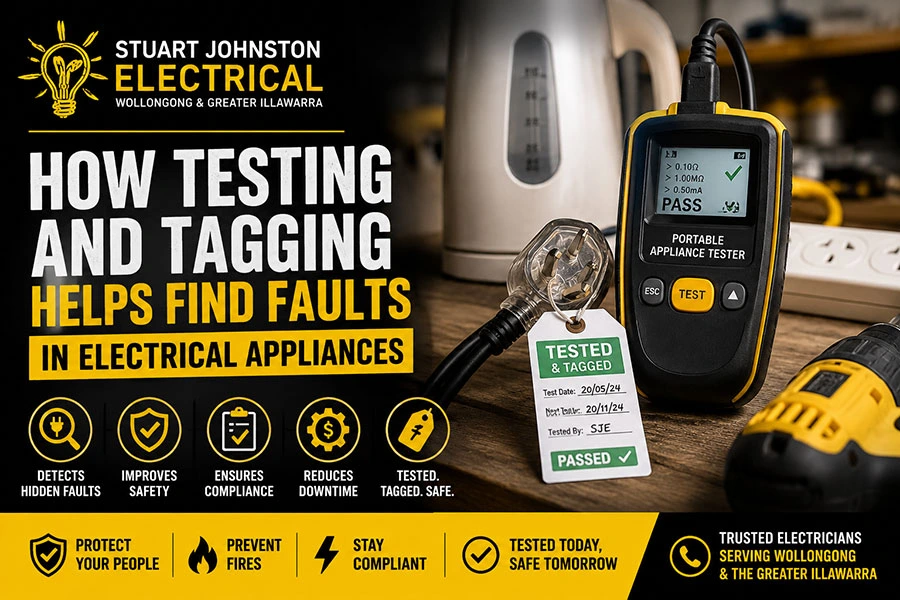
What is Testing and Tagging?
Testing and tagging is a process used to inspect and test electrical appliances and equipment to make sure they are safe to use.
The process generally includes:
- A visual inspection of the appliance
- Electrical testing using specialised equipment
- Recording the test results
- Placing a tag on the appliance showing:
- Test date
- Technician details
- Next testing date
- Pass or fail result
Testing and tagging is commonly carried out on:
- Power tools
- Extension cords
- Office equipment
- Kitchen appliances
- Chargers and adapters
- Portable air conditioners
- Workshop machinery
- Commercial electrical equipment
The goal is simple, identify faults early and reduce the risk of electrical hazards.
Why Testing and Tagging Is Important
Many electrical faults cannot be seen by simply looking at an appliance. Internal damage, worn insulation, faulty wiring, or earthing problems may still exist even if the appliance appears to work normally.
Without proper testing, these hidden faults can lead to:
- Electric shocks
- Electrical fires
- Equipment failures
- Workplace injuries
- Damage to property
- Downtime for businesses
Testing and tagging help detect these problems before they become dangerous.
For businesses, it also helps meet workplace safety obligations under Australian electrical safety regulations and Work Health and Safety (WHS) requirements.
How Testing and Tagging Help Find Faults
Professional electricians use Portable Appliance Testers (PAT testers) to carry out electrical safety tests on appliances and cords. These tests can detect a wide range of electrical issues.
Detects Damaged Power Cords and Plugs
Damaged cords are one of the most common electrical faults found during testing and tagging.
Over time, cords can become:
- Frayed
- Cracked
- Exposed
- Bent
- Heat damaged
These issues may expose live wires and increase the risk of electric shock or fire.
Testing and tagging helps identify damaged cables before they become dangerous.
Finds Faulty Earthing
Earthing is an important safety feature in electrical appliances. It helps safely direct electrical current away in the event of a fault.
If the earthing system is damaged or disconnected, the appliance can become unsafe to use.
Electrical testing can identify:
- Broken earth connections
- Faulty grounding
- Unsafe electrical leakage
This is especially important in commercial workplaces, workshops, and construction environments.
Identifies Insulation Problems
Electrical appliances rely on insulation to protect users from live electrical parts.
Over time, insulation can deteriorate due to:
- Heat
- Moisture
- Dust
- Chemical exposure
- General wear and tear
Testing equipment checks the insulation resistance inside the appliance and helps identify appliances that may pose a safety risk.
Detects Electrical Leakage
Electrical leakage occurs when electricity escapes from the normal electrical path.
Even small amounts of leakage current can become dangerous in wet areas or busy workplaces.
Testing and tagging can detect:
- Current leakage
- Faulty internal wiring
- Unsafe electrical flow
This helps prevent shocks and improves overall workplace safety.
Helps Identify Faulty Safety Switches
Safety switches play a major role in protecting people from electric shock.
During testing, electricians can identify whether safety features are operating correctly and whether equipment trips properly under fault conditions.
Faulty safety mechanisms should always be repaired or replaced immediately.
Finds Faults Caused by Harsh Environments
Electrical appliances used in construction sites, factories, workshops, and warehouses often operate in demanding conditions.
Exposure to:
- Dust
- Moisture
- Heat
- Vibration
- Chemicals
- Outdoor weather
Can damage appliances over time.
Testing and tagging helps detect early signs of damage before the equipment fails completely.
Common Faults Found During Testing and Tagging
Some of the most common electrical faults discovered during inspections include:
| Fault Type | Potential Risk |
| Damaged extension leads | Electric shock or fire |
| Cracked plugs | Exposed live wiring |
| Faulty earth connections | Increased shock risk |
| Internal wiring faults | Equipment failure |
| Moisture damage | Short circuits |
| Overheated appliances | Fire hazards |
| Loose electrical connections | Intermittent faults |
| Damaged insulation | Electrical leakage |
Who Needs Testing and Tagging?
Testing and tagging are important for many Australian businesses and industries.
It is commonly recommended for:
- Construction companies
- Commercial offices
- Warehouses
- Factories
- Retail stores
- Workshops
- Schools
- Hospitality venues
- Real estate properties
- Medical facilities
Workplaces that use portable electrical equipment regularly should have ongoing testing programs in place.
Testing and Tagging in High-Risk Workplaces
Some industries require more frequent electrical testing because equipment is exposed to harsh conditions and constant use.
High-risk workplaces include:
- Construction sites
- Demolition sites
- Mining operations
- Manufacturing facilities
- Industrial workshops
In these environments, damaged electrical equipment can create serious safety risks for workers.
Regular testing and tagging helps reduce workplace accidents and keeps equipment operating safely.
How Often Should Appliances Be Tested?
Testing intervals depend on:
- The type of workplace
- The environment
- The type of equipment
- How often the appliance is used
Here is a general guide based on Australian Standards:
| Workplace Type | Recommended Testing Interval |
| Construction and demolition sites | Every 3 months |
| Factories and workshops | Every 6 months |
| Commercial offices | Every 12 months |
| Hotels and accommodation venues | Every 12 months |
| Residential rental properties | As required during inspections |
| Repaired or second-hand equipment | Before use |
Testing schedules may vary depending on workplace risks and compliance requirements.
Who Can Perform Testing and Tagging?
Testing and tagging should only be carried out by a competent person who has the proper training, knowledge, and testing equipment.
At Stuart Johnston Electrical, our qualified electricians use professional testing equipment and follow current Australian safety standards to ensure accurate results and reliable reporting.
Benefits of Regular Testing and Tagging
Regular testing and tagging offer several important benefits for businesses and property owners.
Improved Workplace Safety
Routine testing helps reduce the risk of:
- Electric shocks
- Fires
- Workplace injuries
- Equipment failures
Better Compliance
Testing records and appliance tags help businesses meet Australian WHS and electrical safety obligations.
Reduced Downtime
Finding faults early helps prevent unexpected equipment breakdowns that may interrupt business operations.
Longer Equipment Lifespan
Regular inspections help identify minor problems before they cause major damage.
Peace of Mind
Knowing your electrical equipment has been professionally tested provides confidence for staff, customers, and property owners.
Signs Your Appliances May Need Testing
You should arrange electrical testing if you notice:
- Flickering power
- Burning smells
- Warm plugs or cords
- Damaged cables
- Frequent tripping
- Power interruptions
- Cracked plugs
- Appliances making unusual noises
Even if equipment appears to work normally, hidden electrical faults may still exist.
Professional Testing and Tagging in Wollongong
At Stuart Johnston Electrical, we provide reliable testing and tagging services for residential, commercial, and industrial clients across Wollongong and the Greater Illawarra.
Our experienced electricians help businesses maintain safe workplaces by identifying faulty electrical appliances before they become dangerous.
We provide:
- Portable appliance testing
- Electrical safety inspections
- Workplace compliance testing
- Cord and plug inspections
- Fault reporting
- Scheduled maintenance programs
Final Thoughts
Testing and tagging is one of the most effective ways to identify hidden electrical faults and improve workplace safety. Regular inspections help detect damaged cords, faulty wiring, electrical leakage, insulation problems, and unsafe appliances before they cause accidents or equipment failures.
Whether you operate a commercial building, workshop, office, or construction site, routine electrical testing is an important part of maintaining a safe environment for workers and customers.
If you need professional testing and tagging services in Wollongong or the Greater Illawarra, Stuart Johnston Electrical is ready to help with reliable service, experienced electricians, and quality workmanship you can trust.